
Rapid Prototyping Services UK
Expert in-house 3D printing services for reduced lead times…
Expert in-house 3D printing services for reduced lead times…
Need prototype castings fast without committing to tooling?
Our rapid prototyping casting service allows you to produce functional metal parts in days, not weeks—ideal for design validation, testing, and low-volume production.
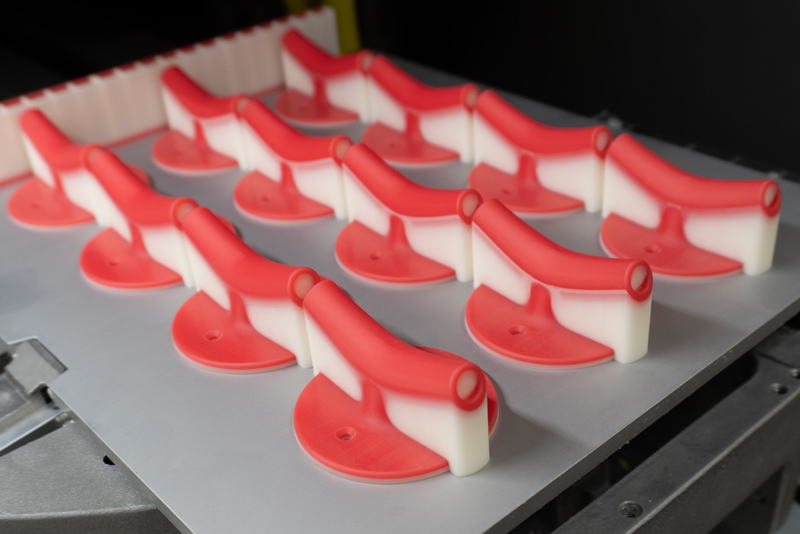
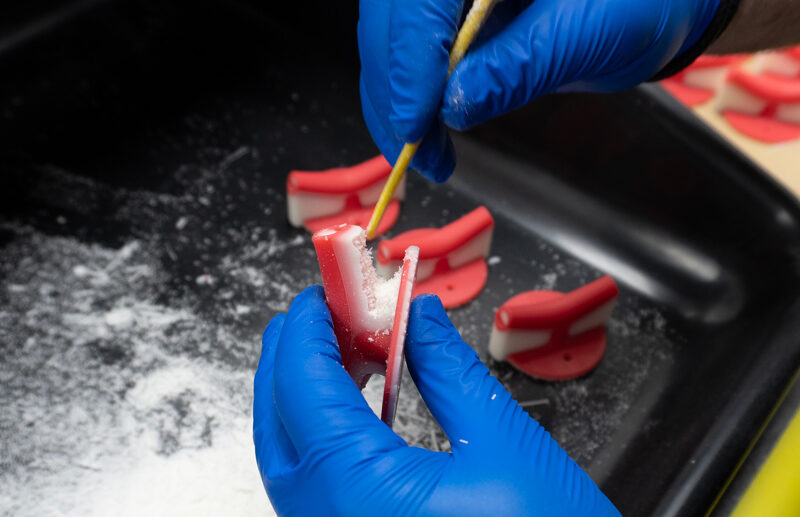
Using 3D printed wax patterns and investment casting, we deliver production-quality components without the cost and delay of hard tooling.
We specialise in rapid casting solutions for buyers who need speed, flexibility, and accuracy, including:
Whether you need 1 part or a small batch, we provide a fast, scalable solution.
With over 25 years of experience in rapid prototyping, Lestercast was one of the first UK foundries to integrate 3D printing into the investment casting process. Today, our technical team delivers high-precision wax patterns and prototype castings with controlled tolerances, excellent surface finish and short lead times.
Our rapid prototyping process does not require tooling.
Receive cast parts in days instead of weeks, helping accelerate product development and qualification.
Make design changes quickly without tooling modification costs.
Best for:
Best for:
By using rapid prototyping within your investment casting manufacturing process, you get the best balance of cost, quality, and speed.
This service is ideal if you are:
Rapid Prototyping Frequently Asked Questions
What is rapid prototyping?
Rapid prototyping is a manufacturing process that uses 3D printing to quickly create prototype parts from CAD data, allowing designs to be tested and refined before production tooling is required.
How does rapid prototyping help investment casting?
Rapid prototyping allows wax patterns to be 3D printed for investment casting, reducing lead times, eliminating tooling, and enabling fast validation of parts before production.
What file types are used for rapid prototyping?
Most rapid prototyping projects use 3D CAD files such as STEP, IGES, or STL to produce accurate wax patterns.
Can rapid prototyping be used for low-volume production?
Rapid prototyping can be used to manufacture low-volume investment cast parts without hard tooling, reducing cost and speeding up delivery.
What are the lead times for a casting produced from rapid prototyping?
Low volume cast only products can be produced in as little as 2-3 weeks, post-cast processes such as machining can add a week, depending on complexity.
How does the surface finish of a rapid prototype casting compare with that of a casting produced using conventional tooling?
We have recently invested in a 3D wax pattern printer which provides a far superior finish to any other on the market. The wax patterns produced by this printer are comparable to those produced from traditional tooling.
How quickly can my wax patterns be printed?
We can print 3D wax patterns the same day as we receive your CAD fie. Although, our engineers evaluate the components’ feasibility for investment casting from the CAD and identify any manufacturing defects that could occur, We do not print wax patterns as a ‘stand-alone’ service.
Is rapid prototyping more expensive?
Rapid prototyping is a cheaper alternative for low volumes, ‘short life’ products or for product testing. It eliminates or postpones the need for tooling to be manufactured. For large volumes, it would be cheaper to use traditional manufacturing techniques, which is why many customers use this route for the early stages of a product.
How does cost compare to tooling?
Rapid prototyping avoids upfront tooling costs, making it far more cost-effective for low volumes.
How accurate are prototype castings?
With our new 3d wax printer, we can achieve the same high accuracy and surface finish for prototype castings, as we do with castings produced from a traditional wax pattern from hard tooling. The manufacturing process is the same during shelling, dewaxing and casting, meaning te finished casting will have the same tolerances.
To further enhance our services, Lestercast has recently invested in a new high-resolution industrial 3D printer dedicated to wax pattern production for investment casting. This latest additive manufacturing system delivers improved accuracy, surface finish and build consistency across complex geometries.
Our new 3D wax pattern printer allows:
This investment strengthens our technical capability and ensures our rapid prototyping service continues to meet demanding engineering and production requirements.
Watch our video – a brief insight into how Lestercast excels as a Rapid Prototyping Specialist.
“ Castings produced from our new 3d wax patterns have the surface finish comparable to castings from hard tooling – AND manufactured in a fraction of the time. ”
“ The rapid prototypes Lestercast have manufactured have allowed engine testing to proceed months ahead of schedule.”
Lestercast provides measurable technical advantages:
Rapid prototyping supports functional testing, assembly trials and design validation under real service conditions.
Our technical rapid prototyping services support demanding sectors including:
Each project is supported by experienced engineers who understand performance criteria, compliance and production constraints. Please visit our technical data page for more information on the materials we cast and the tolerances we achieve.
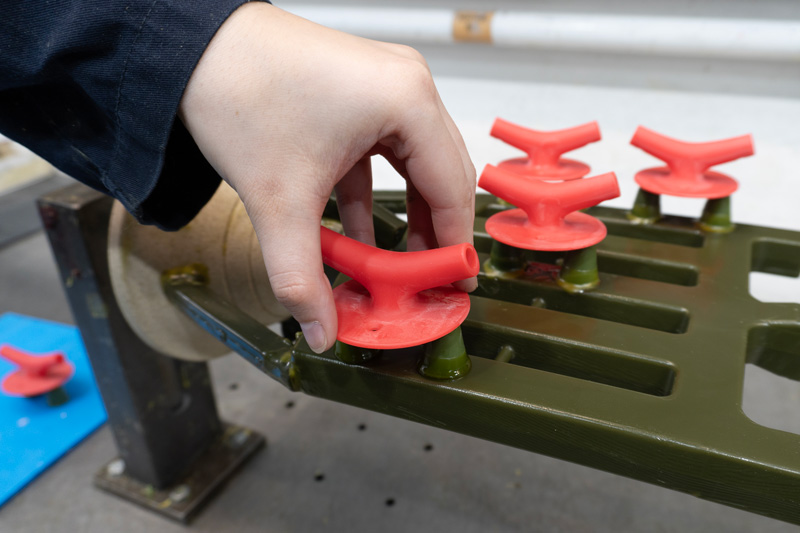
Our rapid prototyping service follows a controlled, engineering-led workflow:
This integrated approach ensures consistency from prototype through to production investment casting.
For more information on the investment casting process click here.
INVESTMENT CASTING VS METAL PRINTING
LESTERCAST INVESTMENT CASTING | 3D METAL PRINTING | |
Production Speed | Lead times dramatically reduced using the latest 3D wax printers. | Fast for prototypes and small runs, but slower for larger or more complex builds. |
Scalability | Highly scalable - ideal for small batches through to high-volume production. | Limited scalability - best suited for low-volume or one-off parts. |
Component Size | Flexible, capable of producing very small to very large parts. | Restricted by printer build chamber size. |
Surface Finish | Excellent surface finish, minimal post-processing required. | Rougher surface, often needs machining or finishing. |
Material Range | Wide range of alloys (steels, aluminium, nickel, cobalt, bronze, etc). | Growing but still limited selection of printable metal powders. |
Microstructure and Mechanical Properties | Only certain alloys require Heat Treatment to achieve desired properties. | Most printed metal parts require multi-stage Heat Treatment to achieve the minimum mechanical properties for the alloy. |
Design Freedom | Very high complexity achievable, especially with wax pattern prototyping. | Exceptional for lattice structures and internal geometries. |
Cost Effectiveness | Cost-efficient for both prototyping and volume production. | Economical for one-offs but expensive at higher volumes. |
Reliability and Consistency | Proven, repeatable, industry-trusted process. | Variation possible between builds, especially across machines. Large temperature differentials during printing cause internal stresses. |
Lestercast have the ISO 9001:2015 and IATF 16949:2016 accreditation in addition to the Cyber Essentials certification – for further information click here. To discuss a potential product with us that could be produced through Rapid Prototyping, please contact us directly, we’d be delighted to talk it through with you.
We offer a wide range of casting materials, including:
Capabilities include:
At Lestercast we offer an in-house 3d scanning service at our R&D Centre. This is primarily used along side our Magmasoft simulation software, to assist the design of components but also regularly used for customers which would like to produce castings from parts that have no cad available.


